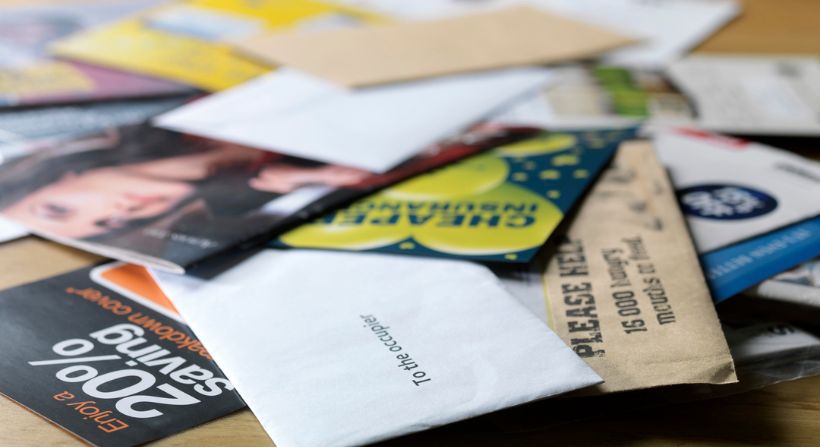
Revive your marketing plan through printed materials alongside your digital efforts to benefit your business.
In today’s digital age, where online advertising and social media dominate the marketing industry, it may seem counterintuitive to turn to traditional printed materials for your marketing efforts.
However, the power of print should not be underestimated.
Incorporating well-designed and targeted printed materials into your marketing strategy can provide a unique and effective way to engage with your audience and elevate your overall marketing efforts.
In fact, 82% of consumerstrust print advertising the most when it comes to making a purchase decision according to Harvard Business Review “Why Marketers Are Returning to Traditional Advertising”.
In this article, we will explore how reviving your marketing plan through printed materials can yield substantial benefits for your business.
With almost everything being digital, it is easy to become “numb” or overlook digital advertisements. Printed materials, physically existing, provide the touch, feeling, and display that a digital asset cannot. Whether it’s a brochure, flyer, or business card, printed materials create a lasting impression and have the potential to leave a more significant impact on recipients by influencing their purchase decisions. Lucky for you, Mudflower Creative specializes in the production of custom-printed solutions. Call us old-fashioned but nothing beats a high-quality business card to build your brand.
Printed materials provide an excellent opportunity to reinforce your brand identity and establish credibility. By incorporating consistent branding elements such as logos, colors, and typography, you can create a cohesive visual experience across all marketing channels. High-quality printed materials also convey professionalism and attention to detail, signaling to your target audience that you take your business seriously. Anyone can create a social media account and mark it as a “business” but investing in professional services to put your brand down on paper legitimizes it for you, and the consumer.
With all that being said, don’t throw your digital marketing strategy completely out the window.
Print advertising should not be seen as a replacement for digital marketing but rather to complement one another. Integrating print with digital outlets will create a powerful multi-channel marketing approach that maximizes impact. Mudflower specializes in packaging marketing services into one while keeping the cost low but the ROI high.
If you read this and are ready to amplify your brand by combining the efforts of both digital and print but don’t know where to start, don’t sweat it – we have you covered. Mudflower will leverage the unique benefits of printed materials alongside your existing digital strategies. Don’t have a digital strategy? We can do that, too! Our localized approach will leave a lasting impression on your consumers by reinforcing your brand identity, creating tangible assets, and making it a seamless integration to create a well-rounded marketing strategy.
Discover how AI is reshaping digital marketing and influencing marketers’ strategies.
The latest buzzword in marketing is ChatGPT. Will this emerging technology transform online marketing to the point of being unrecognizable? We doubt it. Can companies leverage AI as a positive and fruitful source of disruption? ABSOLUTELY!
AI can be a valuable ally to content creators, generating outlines based on audience characteristics, keywords, and search intent. Tools like ChatGPT help streamline the creative process, allowing content teams to fine-tune pieces and ensure they align with strategic intent.
AI’s impact on digital marketing is significant, offering streamlined processes, personalized strategies, and engaging experiences. By embracing AI, businesses can tap into its abilities to enhance their reach, optimize campaigns, and foster meaningful connections with their target audiences.
Digital Marketing In 2023: The Rise Of AI And What It Means For Your Strategy
FROM FORBES: Technology is digital marketers’ gateway to lead gen and relationship building. So it’s no surprise that the rise of AI is reshaping their approaches. But because AI itself is evolving, some skepticism and hesitation are natural.
Will this emerging technology’s capabilities transform online marketing to the point where it’s unrecognizable? Or can companies leverage it so it’s a positive and fruitful source of disruption? Here’s how AI stands to impact the digital marketing world and influence marketers’ strategies.
Laser-Focused Content Creation
Without online content, digital marketers can’t reach their target audiences. But the content creative teams spend precious time crafting doesn’t always make a splash. You can carefully map out a content strategy with every single detail, including desired outcomes for each piece. Yet you’ve got to have the talent to produce those pieces at a high level of quality and a breathtaking pace.
Constantly brainstorming and executing content ideas to perfection is unrealistic, even for teams at the top of their game. Inevitably, human brains come to a standstill. Call it writer’s block, a rut or a creative slump. It happens to content creators all the time. And the pressure to produce something can mean pieces that don’t match a strategy’s ambitions.
While the debate rages as to whether AI will replace human content creators, it can be a good ally. AI can generate outlines based on inputs, such as audience characteristics, keywords and search intent. The technology is able to build structures for entire blog posts or articles, helping writers focus on the points they need to drive home to specific audience segments.
AI tools developed by content marketing firms such as MarketMuse elevate those capabilities. With the help of ChatGPT, the tool makes outlines infused with topic modeling data that can then be turned into blog posts ready for a human touch. Content teams can fine-tune those pieces, ensuring they match strategic intent.
AI saves time by streamlining the creative process. It also helps raise the bar on quality, so published pieces produce better outcomes and content strategies come to fruition.
Marketing strategies develop from data about human behavior. However, digital marketers may discover what they thought they knew about an audience isn’t quite right. Or the information they have is too generalized. It doesn’t provide enough fine-grained insights to develop a goal-crushing campaign.
Digital marketers also see market data through a subjective lens. They may miss patterns because of biases and assumptions. Even the culture of the companies marketers work for can influence the interpretation of data such as customer surveys. Executives looking for a quick fix may unknowingly promote a “be everything to everyone” approach. Consequently, digital marketing messages become too generic.
But AI can sort through large volumes of market data without ego. The tools pick up on patterns across multiple sources, including chatbot conversations and social platforms.
While AI can inform digital marketers of aggregate audience insights, it also shows what’s happening at the individual level. A customer’s past Starbucks coffee purchases can predict if they’ll engage with promo messages in an app. AI helps personalize strategies so they feel more conversational.
Augmented Reality Experiences
Augmented reality is expanding the definition of content marketing. Customers are looking for more than words and videos to engage them. A NielsenIQ survey of shoppers shows 56% say augmented reality increases their confidence in a product’s quality. And around 61% of consumers prefer to shop with brands that offer AR experiences.
When digital marketers use augmented reality, it can influence customer behavior, engagement and sales. The technology encourages shoppers to linger longer. They’re more likely to try more products in online environments. AR experiences can also boost sales. That said, research shows the technology is more effective with brand-new buyers.
Digital marketers targeting new audiences may want to incorporate augmented reality into their strategies. Retailers such as Crate & Barrel already offer this capability to shoppers who may have concerns about buying items like furniture online. Exploring AR environments helps overcome objections to the sale by showing how purchases will look and feel in people’s homes.
These experiences can also extend to behind-the-scenes content about a brand and its locations. People unfamiliar with a company and its products are able to interact in a low-risk environment. They can learn about a brand’s values, gain knowledge about its offerings and “visit” locations they otherwise wouldn’t be able to. Interactive content with built-in augmented reality builds trust and interest without coming across as intrusive.
AI’s Impact on Digital Marketing
AI promises to change how the world works, including the ways digital marketers reach audiences. While relying on technology to drum up interest and sales is part of a digital marketer’s playbook, AI expands it. With the tech’s abilities, your strategies can become more streamlined, personalized and engagement-oriented.
I remember when I first starting learning how to make websites back in 1994, creating a radio button and a submittable form field was a pretty big deal, and it stayed that way for a good decade. Flash came and went, interactive animation came and went, and Web 1.0 became web 2.0. All in all, 28 years of web design that had predictable and logical progressions is about to give way to some fairly radical change.
The Metaverse is billed as the next generation of the internet, and it has a lot to live up to in terms of expectations. Should they be able to pull it off, and that is a tall order to say the least, a VR-based world where you don’t use the internet so much as you travel through it is fairly mind blowing. Whether or not that succeeds remains to be seen, but one thing is for sure. Web 3.0 is going to allow for the richest expression of content design that has ever been possible, and if you’re a creator, that’s very welcome and exciting news.
The Top Two Tech Trends In 2022: Web 3.0 And The Metaverse
FROM FORBES: Apple, Microsoft, Google, Meta and others are racing to dominate the future metaverse platform by creating new products and operating systems for it. The futurist John Naisbitt is frequently credited for the quote that “the most reliable way to forecast the future is to try to understand the present.” By looking at the tech trends that dominated the media in 2021, it is possible to forecast which trends will stand out in 2022. Among many trends that dominated 2021 are mRNA biotechnology, the space race, work from anywhere and the digital workplace, AI and geoengineering, to name a few. However, two that stood out are Web 3.0 (or decentralization) and the metaverse. These two tech trends should continue to pique the interest of the media, techies and the public at large, and they are the focus and analysis of this article.
Web 3.0
Undoubtedly, the talk about Web 3.0 and decentralization has made it to the forefront due to the craze with nonfungible tokens (NFTs). To understand Web3, let’s look back at previous “versions” of the web. In simple terms, Web 1.0 was about passively browsing the web and consuming content in “read-only” mode. Web 2.0 got consumers more active and participative, as they started to contribute content on social media and interact and collaborate with each other. This is the web “version” we are on right now.
Web 3.0 refers to a decentralized paradigm where content creators can “mint,” own, sell and get paid for their content through NFTs, all using various technology components of blockchain. Simply put, minting NFTs means creating a unique digital asset that can be sold with a token as proof of ownership. Later, the selling of NFT files and the payment for them all happens on a blockchain and in a decentralized manner. Web3 is driven by different concepts and components of blockchain technology such as distributed ledger, wallets, smart contracts and NFTs. To what extent will Web3 “emerge” further in 2022? Let’s start with NFTs. According to Gartner, Inc., NFTs are at the “peak of inflated expectations” on the technology hype cycle. While I do agree with Gartner’s assessment, I still see NFTs and blockchain as a technology surviving the hype and surviving a possible crash in 2022.
Since the creation of Bitcoin in 2009, the blockchain technology that powers Bitcoin has made remarkable progress on the performance side. We have moved from seven transactions per second (TPS) on Bitcoin to 50,000 TPS on Solana. Beyond performance, blockchain has proved its usefulness in financial service, decentralized finance (DeFi), the supply chain, digital health and many other domains. We are also seeing successful examples of blockchain implementation in social media.
However, such solutions have not acquired mass adoption for us to say that we have arrived at Web3. We are far from the mass adoption of blockchain social media similar to the likes of Facebook, Instagram, TikTok or Snapchat. Social media blockchain solutions will allow content creators to mint their content, sell it and get paid for it. Alas, such fast, affordable, easy-to-use and decentralized social media platforms are years and decades away.
Despite the successful examples of blockchain implementations, the technology has some serious challenges and obstacles to enabling Web3.
To start, many blockchain solutions are tied to cryptocurrencies, which puts them at risk with inconsistent regulations in various countries. For example, Bitcoin’s price plummeted when China banned cryptocurrencies in 2021. There’s also the technology fragmentation and the paradox of choice that Gartner articulates well: “Users shouldn’t have to worry about picking the right platform, the right smart contract language, the right system interfaces and the right consensus algorithms.”
However, the main reason for blockchain challenges is a lack of interoperability standards between the various blockchains. According to a report by Deloitte, challenges with blockchain interoperability may be an obstacle to the deployment of various solutions. While there is a blockchain interoperability standard in the works by the IEEE Standards Association, the current solutions are still far from simple or workable. Added to the above is the complexity of the technology and the knowledge needed to mint, share, pay for or own NFTs. Digital immigrants will surely struggle with it. Finally, it is costly to be on the blockchain landscape, and it can be expensive before you offer your NFT for sale. It can get especially expensive and slow on Ethereum to exchange NFTs.
The Metaverse
Merriam-Webster defines the metaverse as “a highly immersive virtual world where people gather to socialize, play and work.” According to Meta CEO Mark Zuckerberg, you can think of the metaverse as “an embodied internet that you’re inside of rather than just looking at,” which he believes “is going to be the successor to the mobile internet.” The metaverse could offer near-life experiences in online meetings, social media interactions with friends and family, medical consultations, shopping and trying on clothes or attending “live” concerts. We are already seeing so-called smart clothes and gadgets that users can wear to stimulate the muscles in order to simulate sensations in the metaverse.
Apple, Microsoft, Google, Meta and others are racing to dominate the future metaverse platform by creating new products and operating systems for it.
However, the metaverse will also face its challenges. Like blockchain, the lack of interoperability and having different operating systems with different AR/VR devices that are not interoperable will challenge adoption. This could be the reason why Jefferies analyst Simon Powell told Yahoo that “a single metaverse could be more than a decade away.” In addition, the metaverse requires expensive gadgets and good tech skills to set up. There is also the data privacy issue and trusting Big Tech with even more personal biometric data.
As we can see, there are many serious challenges to both tech trends, and 2022 might see seedlings for these emerging technologies. Some might die on arrival, others will stand out, and many will take years or decades to blossom and produce some ripening, safe and enjoyable fruits. READ MORE
NFTs and the Metaverse: The internet enters a new phase
Meghan Holder
Director of Operations
Meghan is our Director of Operations, and has a degree in marine & environmental sciences, visual arts with a background in financial services as well. She currently serves as Chair of the Agriculture and Environmental Council for the St. Johns County Chamber of Commerce and has been recently named the “Most Charitable Young Professional under 40” in St. Johns County for 2021. She has a passion to help her community through volunteering, educational programs, and philanthropic efforts such as Clean Sweep STA. Wherever she may roam, you won’t find her too far from her pups or the ocean.
Megan Robinson
Illustrator
Megan, a mom of two and a fisherwoman of all, has always been a passionate artist. That creative influence has been cultivated in myriad forms, including freelance graphic design, painting and photography. She came to Mudflower as an Illustrator, but she works designing a multitude of other styles, mediums and projects as well. In Megan’s free time, she enjoys anything outdoorsy or adventurous, dabbling in her entrepreneurial ventures and spending time with family and friends.
Maranda Heykens
GRAPHIC ARTIST
Maranda is a graphic designer that specializes in hand-lettering, typography, illustration, and publication, with her bachelor’s degree in Graphic Design and Digital Media from the University of North Florida and has experience in visual art, creative problem solving, event coordination, and management. When she is not working, she can be found playing sudoku, watching the latest new show, or relaxing somewhere by the beach.
Dara S.
CLIENT SERVICES
Dara is an experienced Marketing Specialist with a demonstrated history working in the marketing and advertising industry, specializing in promotions via Social Media. She received her Bachelor’s degree focused in Broadcast Journalism from University of Florida and has experience in radio production and sales, event coordination, graphic and web design, and social media programming. Dara loves Jesus, real country music, the ocean, and her pup Bella.
Geoffrey Grider
FOUNDER & CREATIVE DIRECTOR
I started with the beginning of the Internet in 1994, and never quit. I have been blessed to work with some of the largest companies in the world, and on some of the coolest projects you could ever imagine. Mudflower is my child, and I wouldn’t want to be anyplace else.
“Looking for that blessed hope, and the glorious appearing of the great God and our Saviour Jesus Christ;” Titus 2:13 (KJV)